State minimum Al content and maximum values for impurities that determine acceptance.
Procurement specification
High-purity aluminium RFQ checklist
A comparable quotation starts with an unambiguous material requirement. Specify chemistry, geometry, quantity, evidence, packaging, destination, and timing in the same request. Unknown fields can remain open, but mandatory limits and preferences should be clearly separated.
Purity and impurities
Form and tolerances
CoA and testing
Quantity and timing
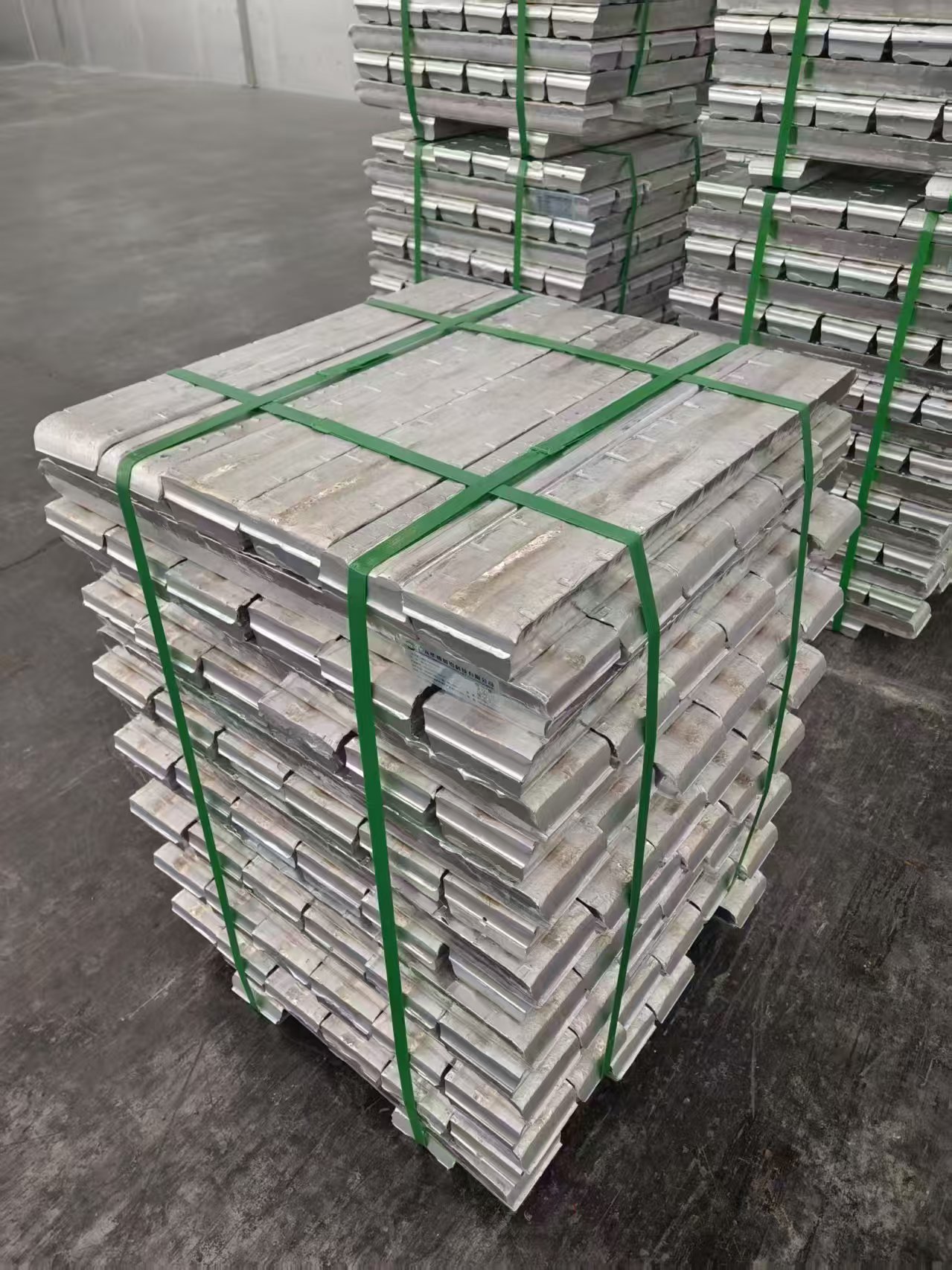
Identify the standard ingot or describe the requested special form with a controlled drawing.
Define which elements, methods, reporting limits, and compliance records must accompany the material.
Separate trial and repeat demand, then request confirmed MOQ, availability, price, and lead time.
Fields to complete
RFQ specification table
Complete what is known and mark the remainder “to be confirmed.” Examples show the required level of precision; they are not default specifications or supply commitments.
| RFQ field | What to provide | Why it matters |
|---|---|---|
| Buyer and contact | Organisation, contact person, role, email, phone, billing entity if already known | Routes technical, quality, and commercial questions to the right owner. |
| Application and project stage | Use of the aluminium; research, prototype, qualification, pilot, or recurring production | Explains which requirements drive suitability and how the first quantity relates to later demand. |
| Purity | Requested grade and minimum Al content: 3N2, 3N5, 3N8, 4N, or a 4N5 project target | Prevents grade notation and numerical purity from being interpreted differently. |
| Critical impurities | Maximum permitted content for each relevant element; identify the calculation basis and units | Total purity can hide an element-specific limit that determines experiment or process performance. |
| Form and material condition | Ingot or requested special form; as-cast, cut, machined, or other required condition | Special forms require a feasibility review and can affect contamination control and yield. |
| Dimensions and tolerances | Nominal dimensions, permissible deviations, units, drawing number and revision | Allows production and inspection to evaluate the same geometry. |
| Quantity profile | Trial quantity, unit of measure, number of pieces, expected repeat quantity or annual range | MOQ, availability, and the viable production route depend on grade, form, and quantity together. |
| Packaging and cleanliness | Individual or bulk pack, contact materials, moisture or surface protection, labels, handling limits | Protects the agreed material condition and supports correct receipt at the destination. |
| CoA and analysis | Required elements, test method, reporting or detection limits, sampling rule, third-party test if required | Aligns the evidence with incoming inspection and release criteria before shipment. |
| Compliance documents | Required declarations or certificates, such as RoHS, SDS, ISO records, or sustainability evidence | Avoids delaying supplier qualification after the material has already been selected. |
| Delivery and commercial terms | Ship-to address, Incoterm if prescribed, currency, quotation entity, and import or consignee constraints | Makes price and logistics assumptions visible and comparable across quotations. |
| Time window | Required-on-site date or acceptable delivery window; distinguish target from hard deadline | Enables a realistic availability and production-scheduling response instead of an unsupported promise. |
Copy-ready request
RFQ text for email or an internal procurement form
Replace the bracketed fields, delete what does not apply, and attach controlled specifications or drawings separately. The copy button selects the full text below.
Subject: RFQ – high-purity aluminium – [grade / application]
Buyer: [organisation, contact person, role, contact details]
Application: [what the aluminium will be used for]
Project stage: [research / prototype / qualification / pilot / recurring demand]
Target purity: [grade and minimum Al content]
Critical impurity limits: [element, maximum value, unit, calculation basis]
Analysis requirements: [elements, method, reporting or detection limits, sampling]
Required form and material condition: [ingot or special form; as-cast / cut / machined / other]
Dimensions and tolerances: [values, units, drawing number and revision]
Trial quantity: [mass and/or piece count]
Expected repeat demand: [quantity and interval, or unknown]
Packaging and cleanliness: [contact materials, individual/bulk pack, protection, labels]
Required documents: [CoA scope, SDS, RoHS, ISO, sustainability evidence, other]
Delivery destination: [full ship-to location and consignee constraints]
Requested delivery window: [target or hard deadline]
Commercial requirements: [Incoterm, currency, quotation validity or other purchasing rules]
Mandatory requirements: [non-negotiable acceptance criteria]
Preferred or open points: [acceptable alternatives / to be confirmed]
Please confirm the offered grade and chemistry basis, form, quantity/MOQ, availability, lead time, price, packaging, CoA scope, commercial terms, and every deviation from this request.
Review before sending
Three checks that make quotations comparable
Price comparison is meaningful only when the suppliers are responding to the same technical and logistical basis.
Separate acceptance criteria from preferences
- Mark fixed chemical limits and required documents as mandatory.
- Label preferred geometry, packaging, or timing as negotiable when alternatives are possible.
- Use “to be confirmed” for unknowns instead of inserting an arbitrary value.
- List permissible alternatives so the supplier can propose a feasible route transparently.
RFQ FAQ
Questions about writing the specification
The same definitions should be usable by research, engineering, quality, and purchasing.
What information is essential in a high-purity aluminium RFQ?
At minimum, state the application, minimum aluminium content, critical impurity limits, required form and dimensions, quantity, delivery destination and time window, packaging, and the required Certificate of Analysis or test documentation.
Is a grade such as 4N enough to define the chemistry?
Not always. A grade defines an overall purity level, but a sensitive application may also need maximum limits for individual elements. State both the minimum aluminium content and any element-specific ceilings, including the required test method or reporting limit when prescribed.
Can a buyer send an RFQ while some requirements are still open?
Yes. Mark each field as mandatory, preferred, or to be confirmed. This lets the supplier identify feasible alternatives without treating an early preference as a fixed acceptance criterion.
What should be included for a special form or drawing-based part?
Include form, dimensions, tolerances, material condition, surface requirements, drawing revision, quantity, packaging, and traceability needs. Special forms are not assumed to be standard stock and require project-specific feasibility confirmation before quotation.
Supporting decisions
Use the matching material and document guidance
These resources help resolve the fields that are commonly left open in a first RFQ.
Research and small quantities
Frame a laboratory, prototype, small-quantity, or special-form requirement before selecting a grade.
Open research guidance4N or 4N5?
Decide when the documented 4N basis is sufficient and when to request a target up to 99.995%.
Open purity comparisonSupplier documents
Define CoA, RoHS, ISO, SDS, and sustainability evidence for qualification.
Open document guideSamples, RFQ, and lead times
Understand how grade, specification, availability, and production planning affect the commercial frame.
Open procurement guideCustom specification
Align chemistry, weight, geometry, packaging, and project requirements.
Open specification pageSend the RFQ
Direct review of specification and feasibility
Price, MOQ, availability, and lead time are confirmed only after the grade, form, quantity, and document requirements have been reviewed.
Sales Representative
Felix Zhao
Email: felix.zhao@huabo-alu.de
Mobile: +4915906479598
Attach the applicable specification and drawing revision, and identify confidential documents clearly.